

Finding a lost object can feel like a small return to yourself. A pendant turns up in a drawer on the day you were thinking about the person who gave it to you. The discovery has an ordinary explanation and may still bring back a memory or an intention you want to keep.
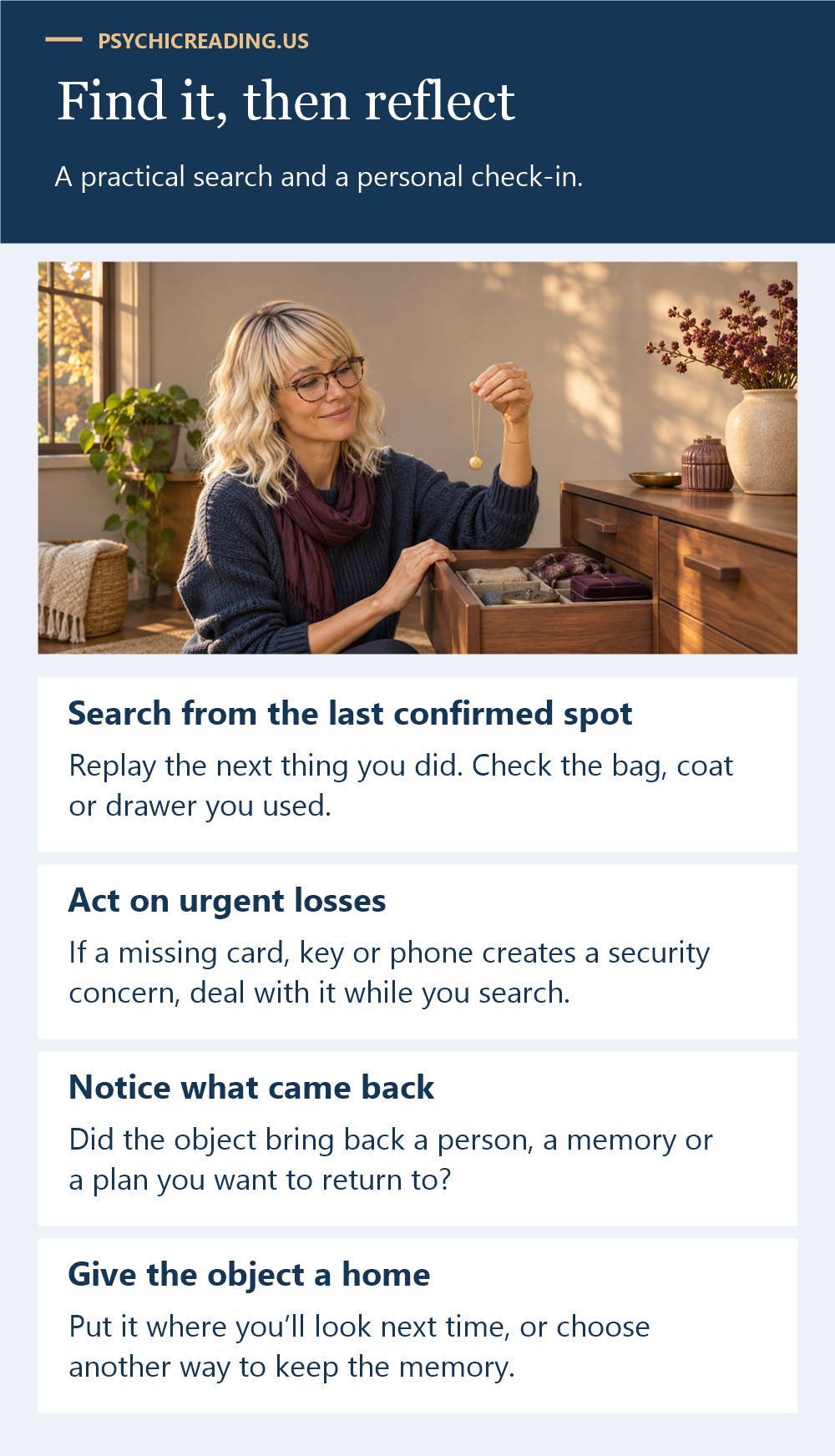
Find the object before interpreting the moment
- Name the last place you know you had it. Use a receipt, message or calendar entry if it helps.
- Replay the next transition. Look at the bag, jacket or tray you used when your hands were full.
- Search one place at a time. If the item is a card, phone or key with security implications, take the practical steps that fit the loss.
- Pause when the search stops being useful. If the object belongs to someone else, use an appropriate lost-and-found or contact the owner through a normal channel.
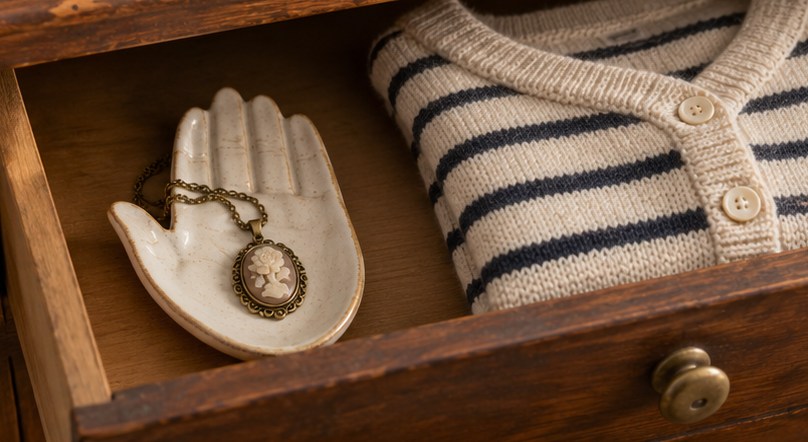
Ask what the object represented
If you find a gift from someone you miss, the meaning might be in the memory it brings back. If you find a key you thought you had lost, the feeling might be relief after an unsettled week. Ask what felt most important when it returned. You can keep the answer private.
What if you found it in a dream?
Think about what changed when you found it in the dream. Were you relieved, surprised or ready to move on? Those feelings can suggest what the object represents to you. If you still need to find the real item, work from the last confirmed place and time.
For a related spiritual practice, our guide to working with spirit guides offers ways to reflect without handing decisions over to a sign.
Two ways to reflect on a rediscovered object
The same object can carry a different meaning depending on what happened when you found it.
- A photograph
- Notice which detail brought the memory back. It might be a place you’d like to revisit or a story you want to ask about.
- A spare key
- Notice whether the strongest feeling is relief. You might choose a regular place to keep it or make a note of who has a copy.
If you are still looking for a meaningful stone, our guide to a lost crystal can help you decide where to look and when to pause.
Try a five-minute search before starting over
Imagine you last wore a ring on a trip to the gym. Look at the transitions: when you took it off, what you were carrying and where that bag went when you got home. Give each likely spot a single, thorough look. If you used a locker or put the ring on a counter outside your home, check with the location’s lost-and-found. Keep a short list of places checked if you need to resume the search later.
When the item turns up somewhere unexpected
Suppose you find a pendant in a bag you rarely use. Think through the last time you had the bag and what else you were carrying. You might remember putting the pendant in an inside pocket before changing clothes. Pick one repeatable habit from what you learned, such as returning jewelry to the same tray before switching bags.
When finding the item brings up more than relief
You may be glad to have it back and still feel sad about the person or time it reminds you of. Give each feeling its own sentence. “I’m relieved I found the pendant. I miss hearing the story of how my aunt got it.” You can wear it, put it away for another day, or ask someone who knew her to tell the story again.
Write down what made the return meaningful
Use three sentences. Start with “I found it when…” Then try “It reminded me of…” and “One thing I’d like to do with that feeling is…” You might choose to call someone, repair the item or put it somewhere you’ll see it. If the object brings up a difficult memory, you can simply decide what you want to do with the object today.
Frequently asked questions
1. Does finding something I lost have a spiritual meaning?
It can carry personal meaning if it brings back a memory, relationship, or intention. Start with what the object meant to you before it went missing and what you felt when it turned up.
2. Where should I look first for a lost object?
Start at the last place you’re sure you had it. Walk through the next transition, such as leaving the car or changing bags, and check one spot at a time.
3. What should I do if I lost a payment card, keys, or phone?
Handle the immediate security concern while you search. Contact the card issuer if needed, secure the phone through your account, or tell the person responsible for the property if a missing key could allow access.
4. What if the object belonged to someone I miss?
Name the memory that came back and choose how you want to keep it. You might write down a story, share a photo with someone who remembers them, or give the object a place where you’ll see it.
5. How do I reflect if the object never turns up?
Ask what you miss about the object and what it represented. You can keep a memory or return to an intention even if the original item stays missing.
6. What should I do with an object that belongs to someone else?
Use the venue’s lost-and-found or contact the owner through an appropriate channel. Share enough detail to arrange its return and keep identifying details private.