
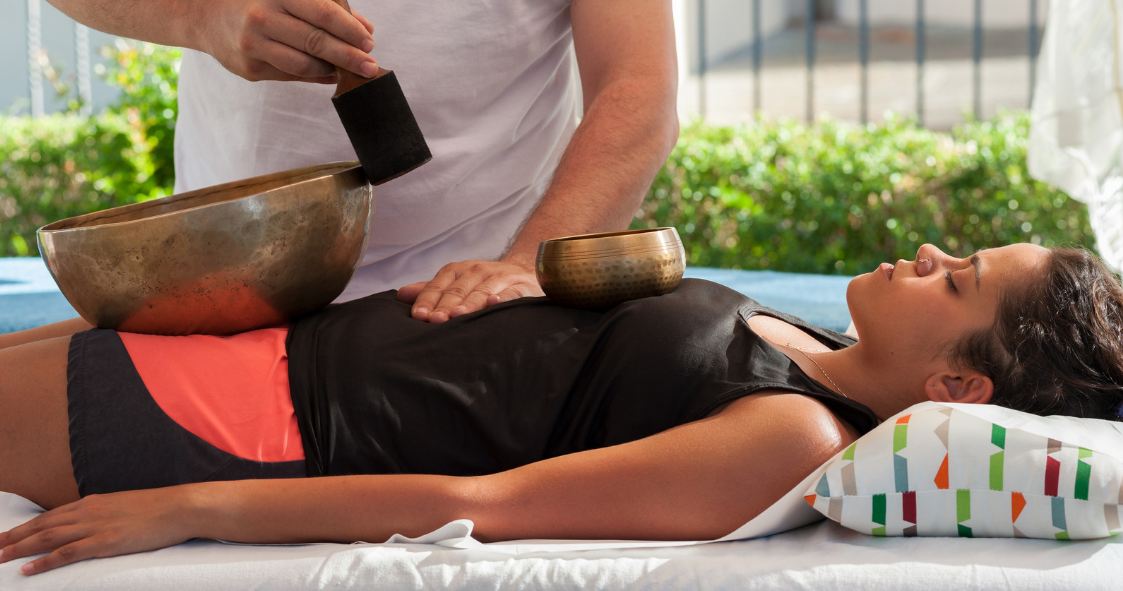
Some days you want to feel more rooted. Other days, you want the courage to speak honestly or a little space to listen to your inner life. Chakra reflection can give those intentions a spiritual language: grounding, expression, compassion or connection.
“Balancing the chakras” is commonly used to describe practices intended to bring harmony to spiritual energy centers. You can find meaning in that framework without treating a feeling, illness or difficult season as proof that an invisible center is blocked.
Start with the quality you want to explore, rather than a problem you must diagnose. A quiet moment and a thoughtful question may be enough; you do not need a collection of products or a perfect ritual.
What does chakra balance mean in a personal practice?
Chakras belong to spiritual teachings and interpretations of the subtle body. They are not a medical test for the cause of pain, fatigue, emotional distress or relationship difficulties. Different traditions and contemporary teachers describe them differently, so avoid assuming there is one universal checklist that establishes whether you are balanced.
You might use the language symbolically: “grounding” for steadiness, “heart” for compassion, “throat” for honest expression, or “third eye” for reflection and intuition. These themes can invite useful questions without proving an energy mechanism.
Try asking, “What would feeling more supported look like today?” An answer such as eating a meal, finishing a manageable task or asking for help gives your intention a place in ordinary life.
Eleven ways to explore chakra reflection
1. Create an atmosphere — incense is optional
A clear surface, comfortable seat and ordinary light can mark the beginning of a ritual. If incense has spiritual meaning for you, remember that burning a substance is not the same as cleaning the air. The EPA explains that indoor combustion produces particulate matter, which can affect the heart and lungs.
A smoke-free space is an easy option, especially when other people share the room. You might use a picture, a piece of music or a spoken intention instead. Avoid making someone uncomfortable in the name of creating harmony.
2. Use a crystal as a reminder
If you enjoy crystals, choose one you already own because its appearance or meaning appeals to you. Orange calcite or lapis lazuli, mentioned in many contemporary spiritual practices, can be personal symbols rather than tools that must perform a cure.
Place the stone beside a journal and give it a simple role: “When I see this, I will remember to pause before saying yes.” A meaningful object does not need proven healing powers to remind you of an intention. Do not use crystals to diagnose or treat symptoms, and keep small objects away from children who may put them in their mouths.
3. Enjoy a salt lamp as lighting, not treatment
If you like the warm appearance of a salt lamp, treat it as a decorative light. Its color can be part of your personal atmosphere, but it should not be relied on to improve blood flow, treat asthma or allergies, or correct a sleep problem.
You can create a similar ritual with an ordinary lamp. Choose enough light to move comfortably, keep cords out of walkways and follow the product’s instructions. The point is to make a space you enjoy, not to buy a device that promises to fix your energy.
4. Choose movement that fits your body
Yoga may be part of a spiritual practice, but a difficult backbend is not necessary to explore a heart-centered intention. You can focus on compassion while sitting comfortably, moving gently or taking a class suited to your experience.
NCCIH’s yoga guidance notes that injuries can occur, recommends a qualified instructor and advises beginners to avoid extreme practices and forceful breathing. People who are pregnant or have health conditions may need individualized modifications. Do not push through pain because a pose is said to “open” a chakra.
A helpful question for a teacher is, “Can you offer a comfortable alternative?” Choosing an adaptation is not a spiritual failure.
5. Make a drink into a pause
A cup of tea, or another drink that suits you, can mark a few minutes away from the rush of the day. Notice the warmth, the cup in your hands and the space between one task and the next.
For a communication-themed practice, write a sentence you want to say clearly: “I need more time,” or “This matters to me.” Drinking tea does not physically open your throat chakra or guarantee better communication. The useful part is making room to consider your words and then choosing how to express them.
6. Keep essential oils optional
A scent you enjoy may be part of your surroundings, but a fragrance is not required for balance or spiritual insight. NCCIH describes aromatherapy as a complementary approach and notes that evidence for helping insomnia is uncertain because rigorous research is limited. That does not establish that oils open a third eye or clear chakra blockages.
For a straightforward home routine, you can skip oils entirely. If you choose a product, follow its instructions rather than improvising mixtures or applying it simply because it is called “natural.” Check before adding fragrance to a shared space. A scent-free ritual is just as available to you.
7. Choose words you can genuinely mean
A mantra or repeated phrase can give your attention a focus. You might prefer a traditional chant that has meaning within a tradition you understand, or a simple personal sentence. You do not have to borrow sacred words or pronounce them perfectly to begin a quiet reflection.
Try “I can take one step,” “My needs can be named,” or “I can be kind without saying yes to everything.” Let the phrase support an intention rather than promise that every difficulty will disappear. Saying it silently is an option if you share your space.
8. Notice the world outside
A garden, a park bench or a view through a window can become a setting for reflection. If you connect earth, water, air or light with spiritual themes, use that connection as symbolism rather than proof that an element activates a specific center.
Notice one detail: leaves moving, the shape of a cloud or the sound of rain. You do not need direct sun exposure, a remote location or a special landscape. Choose a setting that fits the weather, your mobility and your comfort.
9. Let breathing remain comfortable
You do not need breath holds or intensive breathing to explore a grounding intention. The NHS breathing exercise for stress emphasizes a comfortable position and gentle breathing without forcing it.
You can notice your ordinary breath for a few moments and let your attention return when it wanders. If a breathing exercise makes you uncomfortable, stop and return to normal breathing. Seek individual guidance when you have health concerns. Calm breathing should not be presented as proof that chakras are aligned or as a guarantee of improved memory or sleep.
10. Explore visualization without demanding a result
If imagery comes easily to you, imagine a light or color that represents the quality you want to welcome. You might picture warmth while considering compassion or a steady landscape while reflecting on support. This is an imaginative spiritual exercise, not a scan that detects blockages.
If you do not see an image, use words, a drawing or a quiet observation instead. There is no need to force a sensation. If the practice becomes unsettling, end it and choose an ordinary activity that feels comfortable. You are allowed to leave a ritual unfinished.
11. Use color as symbolism, not a prescription
A favorite color can appear in a notebook, clothing or artwork. You might use green as your personal reminder of compassion or blue as a reminder to speak thoughtfully. Contemporary chakra-color conventions are interpretations, not medical instructions.
Wearing a color or eating food of that color does not establish that an energy center has opened. Choose food for your needs and preferences, not because you have been told that a particular shade is required to fix you. Color can add pleasure to a practice without becoming a rule.
A simple five-minute, no-purchase routine
Choose a time when you do not need to rush. This is an optional reflection, not a treatment or a test of spiritual ability:
- Get comfortable. Sit in a supported position, or use another position that works for you. Keep the space smoke-free and adequately lit.
- Name one intention. Choose something specific, such as steadiness, compassion or expression.
- Pause gently. Notice your surroundings or your ordinary breath. Imagery and closed eyes are optional.
- Ask one question. “What is one thing I can do today that expresses this quality?”
- Choose an action. Write the message, ask for help, prepare for a task or make time for rest. Close the practice when you are ready.
For example, a throat-themed reflection might lead you to prepare a respectful sentence before an important conversation. A heart-themed reflection might lead you to apologize without demanding forgiveness. Those actions matter whether or not you interpret the experience as chakra balance.
Using chakra language in a psychic reading
If a reading is meaningful to you, ask how the reader uses chakra language and what they intend it to convey. You could ask, “What could this theme invite me to reflect on?” rather than “Which blockage is causing my problem?”
A reading cannot establish a medical cause or prove that an invisible blockage determines your future. Before booking, check the approach, costs and limits. You should remain free to disagree or decline additional services.
Be cautious about claims that illness, bad luck or relationship trouble will continue unless you buy repeated cleansing. You can explore spiritual meaning without accepting fear-based pressure. For related preparation questions, see what to ask before an aura-cleansing session.
Common questions about balancing chakras
How do I know a chakra is blocked?
There is no medical test in this framework that identifies a spiritual blockage as the cause of your symptoms or circumstances. You can use the idea as a reflection theme, but seek appropriate help for health concerns rather than relying on a spiritual diagnosis.
Do I need crystals, incense or a salt lamp?
No. A journal, a comfortable space and a question are enough for a personal practice. Objects are optional reminders, not required treatments.
What if I do not feel anything during a ritual?
You have not failed. A practice may be quiet or unremarkable. You can change it, shorten it or choose something else without purchasing a stronger version.
Can I use this before a psychic reading?
Yes, as an optional way to consider your intentions and questions. It does not make predictions accurate or remove your responsibility to evaluate advice and make your own choices.
Make harmony something you can live
Chakra reflection can be an invitation to ask what you need, what you value and how you want to act. It does not require you to be perfectly calm, buy the right colors or interpret every difficult feeling as a spiritual defect.
Choose one meaningful practice and one ordinary action. Let your spiritual language support a life that includes comfort, honest communication, appropriate care and room to change your mind.
Using nature and breath work as tools to balance chakras makes sense. Both practices are known to reduce stress and promote overall calmness.
Overall, the article offers a well-rounded look at different strategies to maintain chakra health. Each method has its unique benefits and could resonate differently with individuals.
Positive mantras and yoga have been widely acknowledged for their benefits in energy balancing. It’s practical advice for anyone looking to integrate these practices.
The inclusion of color therapy and visualization techniques could be beneficial for those who have trouble with traditional meditation methods.
Color therapy’s impact on chakras is a fascinating subject. Wearing specific colors to influence energy centers is an accessible approach.
Indeed, visualization can be a powerful tool when incorporated into meditation. It provides a focused method to relax and align the mind.
Interesting that the article suggests salt lamps for improving blood flow and sleep. Would be curious to see if there are scientific studies supporting these claims.
The article provides a comprehensive list of methods to balance chakras. Incorporating such practices could potentially enhance mental and physical well-being.
The discussion on drinking tea to open the throat chakra adds an interesting dimension to the role of daily habits in maintaining chakra balance.
It’s intriguing how different elements like incense, crystals, and essential oils can influence the energy centers. Worth exploring further for anyone invested in holistic health.