

A disagreement about dishes suddenly becomes a joke at your expense. You leave the conversation feeling smaller rather than understood. Contempt in a relationship can turn an ordinary problem into a question of dignity—and it deserves attention, even when you still love your partner.
If you see your bond as a soul connection, that belief can hold personal meaning. It does not make disrespect a lesson you must endure. This guide explores contempt, practical repair and the boundaries a psychic reading cannot decide for you.
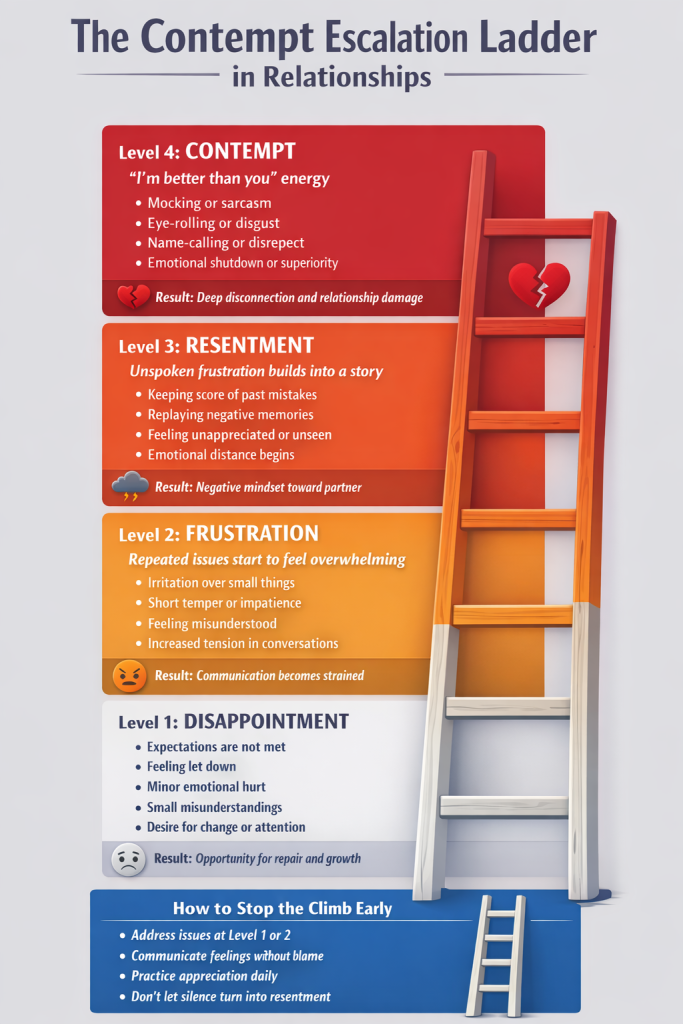
What Contempt Looks Like
Contempt isn’t always loud and direct, and it’s not always obvious because it can also be nonverbal and subtle. Here are some common signs of contempt in your relationship:
- Eye-rolling.
- Sarcasm.
- Mocking.
- Belittling.
- Acting condescending.
- Acting superior.
- Laughing at your partner when there’s conflict.
Context matters: a single facial expression does not establish a pattern or reveal someone’s intent. Look at repeated behavior, how it affects you and whether the person takes responsibility when you name it.
The Gottman Institute describes contempt as communication that conveys disgust and superiority, including mocking, hostile humor and condescension. It recommends expressing feelings and needs and cultivating genuine appreciation as ways to address the pattern.
What Does Contempt Show?
When someone is using contempt in a relationship, it communicates to their partner that they’re not worthy of respect. This changes conflicts from solving a problem to attacking a person or their values, and this is what makes it so dangerous.
Where Does Contempt Come From?
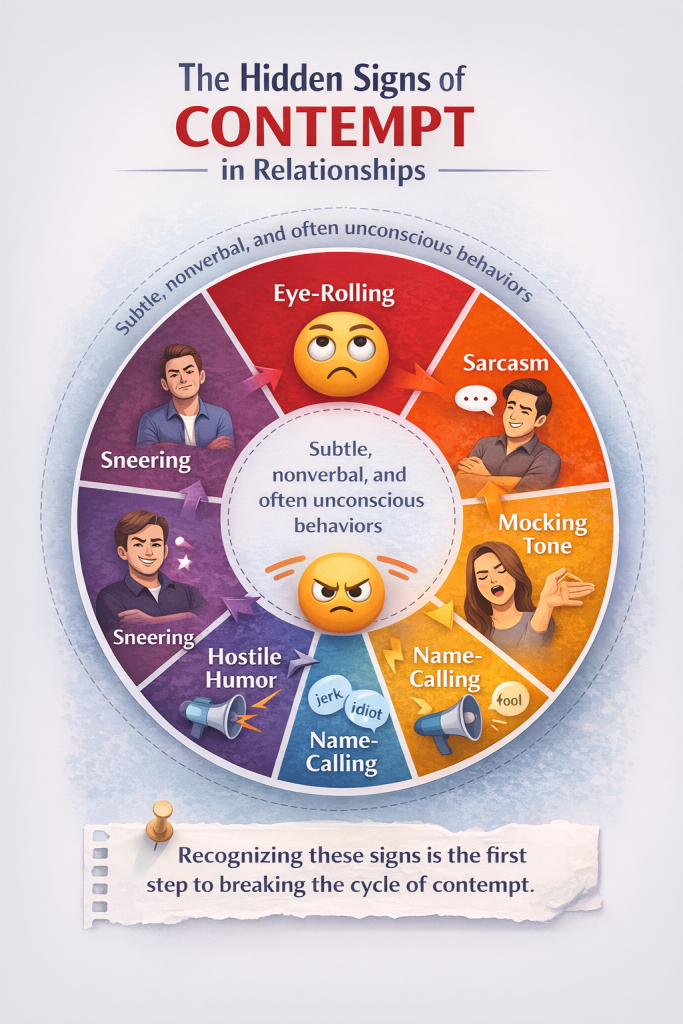
Contempt can develop through repeated resentment, dismissiveness or learned habits of superiority. There is no single explanation for every couple, and an explanation never excuses humiliating someone. Possible contributors include:
Feeling Unseen or Unappreciated
Feeling unvalued or taken for granted may contribute to resentment. But resentment does not inevitably become contempt, and feeling hurt does not entitle anyone to belittle a partner.
Unresolved Emotions
Unresolved emotions like disappointment or anger can add up if they’re not addressed the right way. Instead of being able to express yourself constructively, these unresolved emotions can come out as criticism, disrespect, or sarcasm.
Negative Interpretation
As time goes on, partners might assume negative intent from the beginning, even when the situation is neutral. This is called a negative mindset and shows where:
- Neutral actions are looked at as negative.
- Small issues feel bigger than they are.
- Positive actions get overlooked.
This creates a cycle where negativity is the automatic response.
More Conflict Patterns
Contempt may be part of a bigger pattern that includes things like:
- Criticism.
- Defensiveness.
- Stonewalling.
These different patterns work together to create more conflict as time goes on.
Why is Contempt Harmful?
Repeated contempt can make trust and repair harder. A pattern is a reason to take action, not a certain forecast of your relationship’s future. Here are some ways it can cause harm:
- It turns small issues into personal attacks.
- It makes it hard to reconcile the relationship.
- It replaces respect with superiority.
- It damages emotional safety in the relationship.
When contempt happens frequently, the partners start to feel mostly unsafe, and this causes them to withdraw or there to be constant conflict between them.
Escalating Patterns and Constructive Alternatives
These are examples of escalating and constructive habits, not a test that sorts every couple into happy or unhappy categories. No tally of kind moments cancels out threats or abuse.
Patterns that escalate conflict
- Respond to negativity with more negativity.
- Conflicts escalate fast.
- They focus on what’s wrong with their partner.
- They build up resentment.
Habits that can support repair
- Respond to negativity with more understanding.
- Keep the positive interactions balanced with the negative.
- Give each other the benefit of the doubt.
- Stay emotionally engaged even in disagreements.
Positive experiences can support connection, but a relationship is not an arithmetic score. Respect, consent, accountability and safety matter alongside affection.
Contempt Builds Over Time
One disagreement is not the whole story. An escalating pattern might look like this; it is an illustration, not an inevitable sequence:
- Small frustrations aren’t addressed.
- Negative feelings start to build.
- Communication gets harder.
- Respect stops.
- Contempt becomes the default response to every conversation.
As this pattern continues to grow, emotional distance increases, and this makes the relationship weaker.
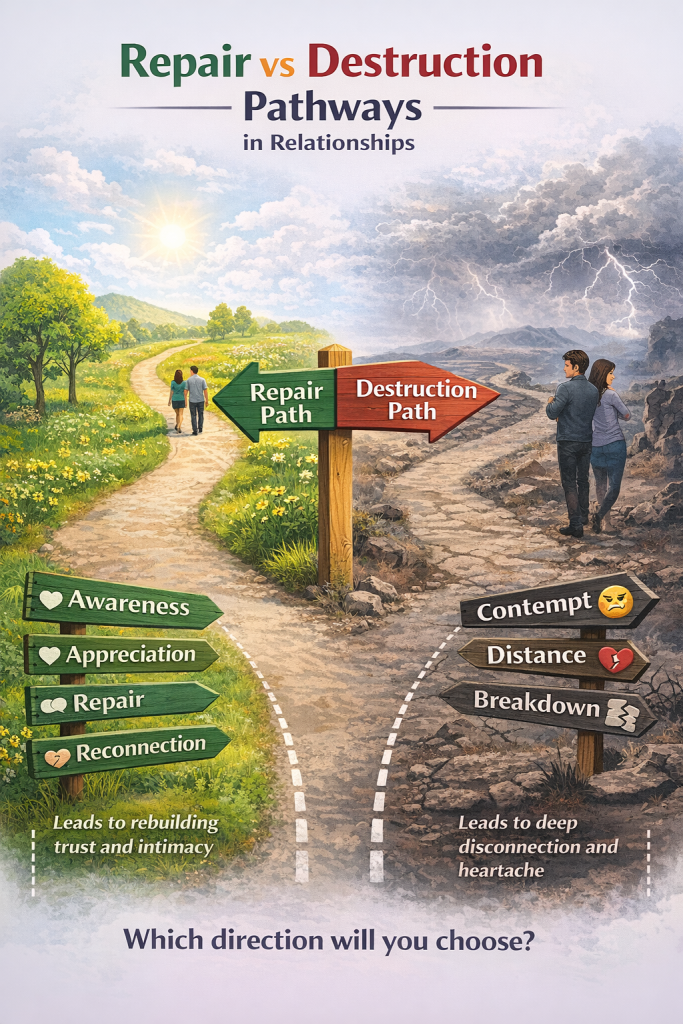
How to Repair Contempt in a Relationship
Repair may be possible when both people can participate freely and the person using contempt takes responsibility. The steps below are for disagreements where it is safe to speak honestly—not for managing coercion, threats or violence.
1. Start Conversations in a Healthier Way
A specific, respectful opening can make your concern easier to hear. It cannot control another person’s response.
Instead of saying:
- “You never listen to me.”
Try saying:
- “I feel frustrated when I don’t feel heard. I just want us to slow down and really listen to each other.”
A calmer, softer start helps lower defensiveness and makes it easier to actually understand each other.
2. Lead With Emotion Instead of Criticism
If hurt, fear or feeling unimportant is beneath your sarcasm, name that feeling without using it as an excuse. Instead of covering those feelings with sarcasm or frustration, try expressing them directly:
- Say “I feel hurt” instead of being sarcastic.
- Say “I need support” instead of criticizing.
Being open like this helps build connection, while contempt tends to push people further apart.
3. Bring Back Respect and Appreciation
One of the most powerful ways to shift the dynamic is by intentionally bringing back positive feelings.
Simple ways to do this include:
- Say thank you for something specific.
- Notice genuine effort.
- Offer a sincere compliment without demanding one back.
- Keep appreciation separate from accountability for harm.
These small actions can slowly change the tone of the relationship.
4. Add More Positive Moments
Healthy relationships aren’t about avoiding conflict, but they’re about balancing it with positive experiences.
Try focusing on:
- Choose time together that both people want.
- Share humor without making either person the target.
- Offer support while respecting boundaries.
These positive things can help create a stronger foundation and make conflict easier to work through.
5. Interrupt the Negative Pattern
When things start to escalate, it’s important to step back before it gets worse.
- If safe, pause rather than continuing insults.
- Agree when to return to the issue; a pause should not become punishment or indefinite silence.
- Return to one concrete concern and one realistic request.
Breaking the cycle in the moment can prevent more damage and give you a chance to handle things in a healthier way.
6. Make an Accountable Repair
If you made a cutting remark, try: “I mocked you when we discussed the bills. That was disrespectful. I am sorry. Next time I will name the specific concern without insulting you.” This is an example, not a promise that the apology will be accepted. Follow-through matters more than a persuasive speech.
When Safety Matters More Than Communication Tips
If contempt is accompanied by threats, control, intimidation or fear of retaliation, you do not have to handle it by being kinder or more vulnerable. The National Domestic Violence Hotline explains that change requires accountability from the person causing harm; you cannot make that choice for them. It does not recommend couples counseling as a way to address abusive patterns. Seek individual support and safety planning instead. In immediate danger, contact local emergency services.
Spiritual Reflection Without Surrendering Your Boundaries
A quiet prayer, journal entry or optional tarot reflection may help you name what respect means to you. Ask “What boundary do I need?” or “What behavior would show real change?” rather than “Are we destined to stay together?” A card or psychic interpretation cannot establish a partner’s thoughts, guarantee change or determine whether you are safe.
If you choose a reading, keep it focused on your own reflection and choices. A reading should not replace relationship or safety support. Do not accept a soulmate or karmic label as a reason to endure humiliation.
Checking Yourself
Ask yourself these things:
- Do I feel better than my partner during conflict?
- Am I sarcastic or dismissive?
- Am I focusing more on what’s wrong than what is good in the relationship?
Being aware is one of the first steps towards making changes.
Respect Is the Starting Point
You can care deeply for someone and still require respectful treatment. Some couples rebuild connection through sustained accountability and support; others decide the relationship is no longer right for them. Neither outcome can be guaranteed by a reading or a communication technique.
Notice actions over time: fewer insults, boundaries respected, responsibility accepted and concerns heard without punishment. Spiritual hope can sit alongside those practical standards—not replace them.
FAQ
- What is contempt in a relationship?
Contempt in a relationship is a pattern of disrespect where one partner treats the other as inferior, unworthy, or beneath them. It often shows up through sarcasm, mocking, belittling, eye-rolling, or a superior attitude. - Why is contempt so damaging?
Contempt is damaging because it shifts conflict away from solving a problem and turns it into an attack on the other person’s character or worth. Over time, it weakens respect, trust, and emotional safety. - What are common signs of contempt?
Common signs include eye-rolling, sarcasm, mocking, belittling, acting condescending, acting superior, and laughing at a partner during conflict. Even a smirk or dismissive look can carry a painful message. - Is contempt always obvious?
No. Contempt is not always loud or direct. It can be subtle, nonverbal, and easy to miss at first, which is part of why it can quietly grow over time. - What causes contempt to develop?
Resentment, unresolved conflict and learned habits of superiority may contribute. Causes vary, and feeling hurt never excuses humiliating a partner. - Can feeling unappreciated lead to contempt?
Yes. When someone feels ignored, taken for granted, or emotionally overlooked for too long, frustration can deepen into resentment, and resentment can eventually turn into contempt. - How do unresolved emotions contribute to contempt?
Unresolved feelings such as disappointment, anger, or hurt can come out in unhealthy ways when they are not expressed directly. Instead of honest emotion, the person may start using criticism, sarcasm, or disrespect. - What is negative interpretation in a relationship?
Negative interpretation is when a partner starts assuming bad intent even in neutral situations. Small issues feel bigger, positive actions get ignored, and negativity becomes the default lens. - How is contempt different from criticism?
A specific complaint names a behavior. Criticism may attack character; contempt adds superiority, disgust or humiliation. Focus on observable conduct rather than labeling a person’s entire character. - Can contempt destroy a relationship?
Repeated contempt can seriously harm trust and connection. It does not provide a certain prediction of a particular relationship’s future. - Does contempt always mean the relationship is over?
Not necessarily. Repair may be possible with safety, accountability and sustained behavior change, but reconciliation is not guaranteed or required. - How can couples start repairing contempt?
A strong first step is changing how hard conversations begin. A softer, calmer opening lowers defensiveness and makes it easier for both people to feel heard. - Why is a softer start-up important?
The way a conversation starts often shapes where it goes. Beginning with blame usually triggers defensiveness, while starting with honest feelings and a calmer tone supports understanding. - What should I say instead of being sarcastic?
Try naming the real feeling underneath the sarcasm. Saying “I feel hurt,” “I feel frustrated,” or “I need support” is more constructive than making cutting remarks. - Can appreciation really help fix contempt?
Genuine appreciation can support connection, but it is not a cure or a substitute for accountability. Kind gestures do not cancel threats, control or abuse. - Why do positive moments matter so much?
Healthy relationships are not conflict-free, but they are balanced by supportive, enjoyable, and emotionally connected moments. Positive experiences make it easier to recover from disagreements. - What should couples do when conflict starts escalating?
Pause before the interaction gets worse. Stepping back, avoiding a reactive response, and returning later when both people are calmer can prevent more emotional damage. - How can I check whether I am showing contempt?
Ask yourself whether you feel superior during conflict, use sarcasm, act dismissively, or focus mostly on what is wrong with your partner. Self-awareness is one of the first steps toward change. - Can one person stop the cycle of contempt?
You can change your own behavior and set boundaries, but you cannot make someone else stop humiliating you. The person using contempt must take responsibility; seek individual support if there is fear or control. - What is the main goal when healing contempt?
The goal is not to eliminate all conflict. It is to handle conflict in a way that protects the relationship instead of harming it, with mutual respect as the foundation.
The article nicely traces contempt from feeling unseen to habitual disparagement, and I appreciate that it offers both immediate tactics and long-term habits to restore safety. Emphasizing curiosity, appreciation, and intentional pauses provides a humane framework for couples committed to repairing trust and mutual respect.
This makes me feel hopeful because it says contempt can be changed with steady effort. I like the tip to slow down and say how you feel instead of making jokes that hurt. Small changes like saying thanks feel like they can add up fast. 👍
This piece really captures how contempt quietly corrodes connection and trust over time. The practical tips about starting softer and naming feelings are so useful, and the emphasis on rebuilding respect through small appreciative acts feels hopeful and doable. Thank you for this clear roadmap! 🙂
I like how it says small things matter. Saying thank you and noticing little efforts can change a lot. It sounds simple but it can slowly fix the hurt and make people feel seen again. Nice reminders and good to try for sure! 🌟
A thoughtful synthesis of research and practical guidance: the article highlights contempt as an erosion of mutual respect and outlines concrete conversational shifts, like vulnerability rather than criticism, that recalibrate interactions toward repair and safety. This reframing makes restorative work feel intentional and achievable.
This helped me see how eye rolls and sarcasm add up. The steps about pausing and bringing back appreciation seem simple and kind. I want to try saying what I feel instead of snapping, and to notice the little things my partner does. 😊
Good reminder that contempt is often built from feeling unvalued, not just anger. The list of signs and the repair tips are practical and realistic, especially the idea of more positive moments alongside conflict. It feels encouraging to know change is possible with effort.
This write-up distills a complex interpersonal dynamic into accessible observations while preserving nuance: contempt functions as both a symptom and accelerator of relational decay, converting discrete grievances into enduring disparagement. The recommended interventions—soft startups, vulnerability, and rebuilding positive interactions—are empirically grounded and genuinely restorative when practiced with care.
Clear, empathetic, and practical — this piece lays out why contempt is so destructive and gives real steps couples can take to reverse it. I like the emphasis on interrupting negative patterns in the moment and on building more positive interactions over time. Encouraging and actionable advice.
What stood out is the idea that contempt changes conflict into character attacks, which explains why some fights feel so harmful. The practical suggestions—starting gently, naming emotions, and intentionally increasing positive interactions—are simple but powerful strategies that can rebuild warmth and safety with consistency.
An excellent, research-informed primer: contempt is framed not merely as occasional harshness but as a corrosive pattern that degrades respect and safety. The corrective pathway—softened openings, vulnerability, intentional appreciation, and interrupting escalation—offers a coherent behavioral architecture for couples seeking durable repair and renewed intimacy.
I appreciated how the article points out that contempt can be subtle, like a smirk or a sneer, and still very damaging. The advice to bring back appreciation and notice small acts feels doable. I’m going to try more thank yous and less sarcasm at home. 💖