

After a breakup, even familiar parts of the day can feel different. A song, an empty chair or a plan you no longer share may bring the loss back into focus. If spirituality is important to you, you may also wonder what the ending means for your soul.
You do not have to answer that question immediately. Heartbreak is not proof that you failed, and it is not a required doorway to spiritual awakening. You may eventually find meaning in the experience, but you do not owe anyone a lesson, gratitude or a transformation.
Make room for loss before searching for a purpose
You may be missing a person, a routine, companionship or the future you imagined together. The NHS guidance on grief and loss recognizes that the end of a relationship can bring grief, and that feelings vary rather than following a fixed sequence.
You can be relieved about an ending and sad about it at the same time. You can miss someone without deciding to return. Neither feeling establishes destiny or tells you what the other person thinks.
Five gentle ways to reconnect with yourself
1. Assess: name what changed without judging yourself
Instead of inspecting your life as “wreckage,” give the loss a few specific names. What do you miss? Which plans have changed? What practical matters need attention?
You might write three short lists: what I miss, what I do not want to repeat, and what I need this week. Keep the exercise manageable. If it becomes overwhelming, pause and return to it with support.
For example, missing evening conversations does not necessarily mean you want the whole relationship back. It may show that companionship is a need worth tending in other ways.
2. Love: choose care that fits your actual capacity
Self-care does not have to look like a new identity, a busy social calendar or an expensive retreat. A regular meal, a manageable task or a conversation with someone you trust can be a place to start.
The NHS suggests small achievable goals and talking with supportive people when coping with loss. Adapt any activity to your health, energy and circumstances; you do not have to force yourself to be cheerful or productive.
If a spiritual image of light comforts you, you can use it as a metaphor for kindness toward yourself. Feeling sad does not mean you have shut that light out or failed to love yourself.
3. Loosen self-judgment: pain is not selfishness
You may replay a conversation, worry about how others see you or wish you had handled something differently. You can reflect on your own actions without dismissing the hurt as a bruised ego.
Try a kinder question: “What would I say to a friend who was feeling this?” A specific apology or lesson may matter, but endless self-criticism does not have to become your daily practice.
Helping someone else is optional, not a requirement for healing. If you have little to give right now, receiving support is allowed. Your sadness is not a moral failure.
4. Soothe your soul: make quiet time optional
Prayer, journaling or a brief quiet moment may help you explore your values if those practices fit your beliefs. You do not need to find a hidden spiritual message or reach a particular state.
You could finish one sentence: “Today, I want to treat myself with…” Then choose a small action that expresses it. If sitting quietly makes you more distressed, stop and try an ordinary grounding activity or reach out for support.
You do not have to fully love yourself before you can love or be loved by someone else. You remain worthy of connection while you are struggling.
5. Let values guide: consider feelings without obeying them
What you call your higher self or inner guidance can be a language for reflection. It is not a verified source of instructions, and a strong feeling does not guarantee the right decision.
Before acting, consider your needs, observable facts and other people’s boundaries. A longing to reconnect does not override an ex’s request for space. A dream does not establish that they want you back.
You might ask, “What choice reflects care and respect today?” The answer could be resting, arranging practical support or deciding not to send a message. Meaning does not have to become action immediately.
A small plan for a difficult day
- Check a basic need: Is there a meal, rest opportunity or practical task you can manage?
- Name one feeling: You do not need to explain it spiritually or fix it at once.
- Choose one support: Contact a trusted person or qualified service if needed.
- Keep one boundary: Give yourself space from contact or reminders that you do not want today, while handling necessary responsibilities appropriately.
- Leave tomorrow open: You can revise the plan. A hard day is not a failed healing journey.
This is a menu, not a test. You can choose one step rather than doing everything, and you can ask for help with it.
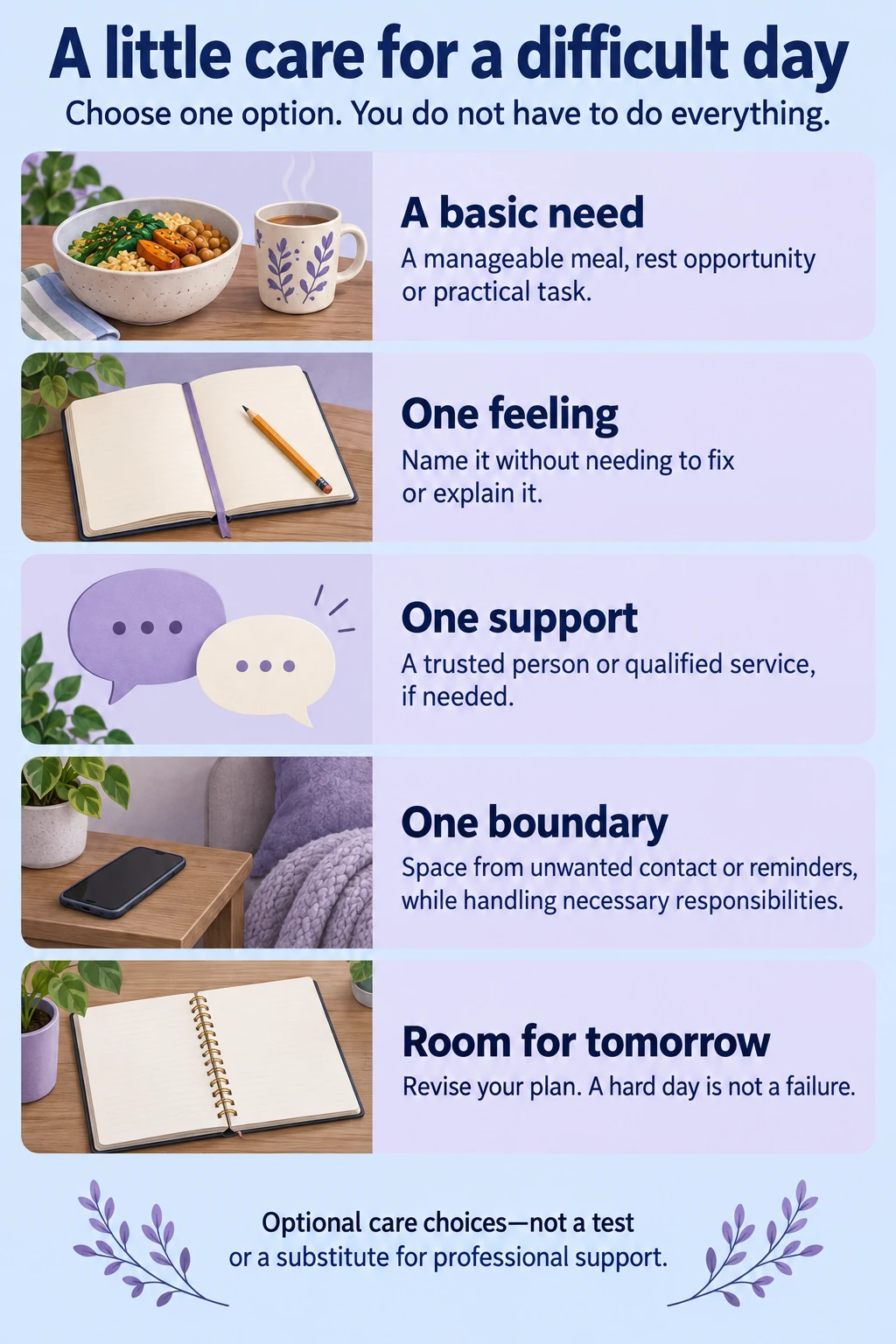
Read the difficult-day care menu as text
A little care for a difficult day. Choose one option. You do not have to do everything.
- A basic need: A manageable meal, rest opportunity or practical task.
- One feeling: Name it without needing to fix or explain it.
- One support: A trusted person or qualified service, if needed.
- One boundary: Space from unwanted contact or reminders, while handling necessary responsibilities.
- Room for tomorrow: Revise your plan. A hard day is not a failure.
Optional care choices—not a test or a substitute for professional support.
When you need more than reflection
Seek qualified help if low mood, distress or difficulty coping persists or disrupts everyday life. The National Institute of Mental Health explains depression and support options. Depression is a health condition, not evidence of blocked spiritual growth.
If you are in the United States and struggling with thoughts of suicide or a mental-health crisis, call or text 988. In a life-threatening emergency, call 911. Outside the US, use your local crisis or emergency service.
If the relationship involved abuse, you do not need to return, confront the person or forgive them to find meaning. Seek individualized safety support rather than relying on a prediction of reunion or change.
Where a psychic reading may fit
You may choose a reading as a time to reflect on hopes and patterns. Questions such as “What do I want to carry forward?” or “What boundaries matter to me?” keep attention on your own choices.
A reader cannot verify why the breakup happened at a soul level, know an ex’s private feelings or guarantee a reunion. Decline pressure to purchase remedies or repeated sessions said to restore the connection. A reading is not a substitute for mental-health care.
If you are considering renewed contact, our guide to questions before a soulmate reunion offers practical reflection without an obligation to return.
Frequently asked questions
Does heartbreak always lead to spiritual awakening?
No. You may find meaning, or you may simply need time and support. There is no transformation you must achieve.
Do I need to feel grateful for the breakup?
No. You can acknowledge loss and harm without calling them gifts or pretending they were necessary.
Does missing someone mean we are meant to reunite?
No. Longing does not establish compatibility, mutual interest or destiny. Respect present choices and boundaries.
Can spiritual reflection and professional support coexist?
Yes. You can keep meaningful beliefs while seeking qualified care. A reading or ritual should not delay needed support.
You do not have to turn pain into a performance
You can move through this chapter without becoming a different person on demand. Let spiritual meaning arrive if it helps, let support be practical, and give yourself permission to care for the life you have today.
The emphasis on allowing inner guidance to lead the healing process is compelling. Trusting one’s inner voice is often overlooked in modern life.
Learning to love oneself and not relying on others for validation is a crucial lesson. This message is well conveyed in the article.
The advice to let go of one’s ego is quite insightful. Often, ego does play a sizeable role in how we handle heartbreak.
Indeed, ego can cloud our judgment and slow down the healing process. Recognizing this is the first step to genuine recovery.
Meditating and finding a quiet time to connect with one’s soul can be profoundly beneficial. This piece offers practical steps towards achieving inner peace.
The perspective given here emphasizes self-discovery and healing, which is essential after heartbreak.
I appreciate the focus on self-love and caring for oneself. It is a necessary step in the recovery process after a significant emotional setback.
It is interesting how the article suggests that heartbreak can lead to a higher level of awakening. The concept of assessing the damage before healing is a practical approach.
The idea of using heartbreak as an opportunity to meet your highest self is quite motivating. It turns a negative experience into a potentially transformative one.
Transformative indeed. It is a reminder that even painful experiences can lead to personal growth and enlightenment.