
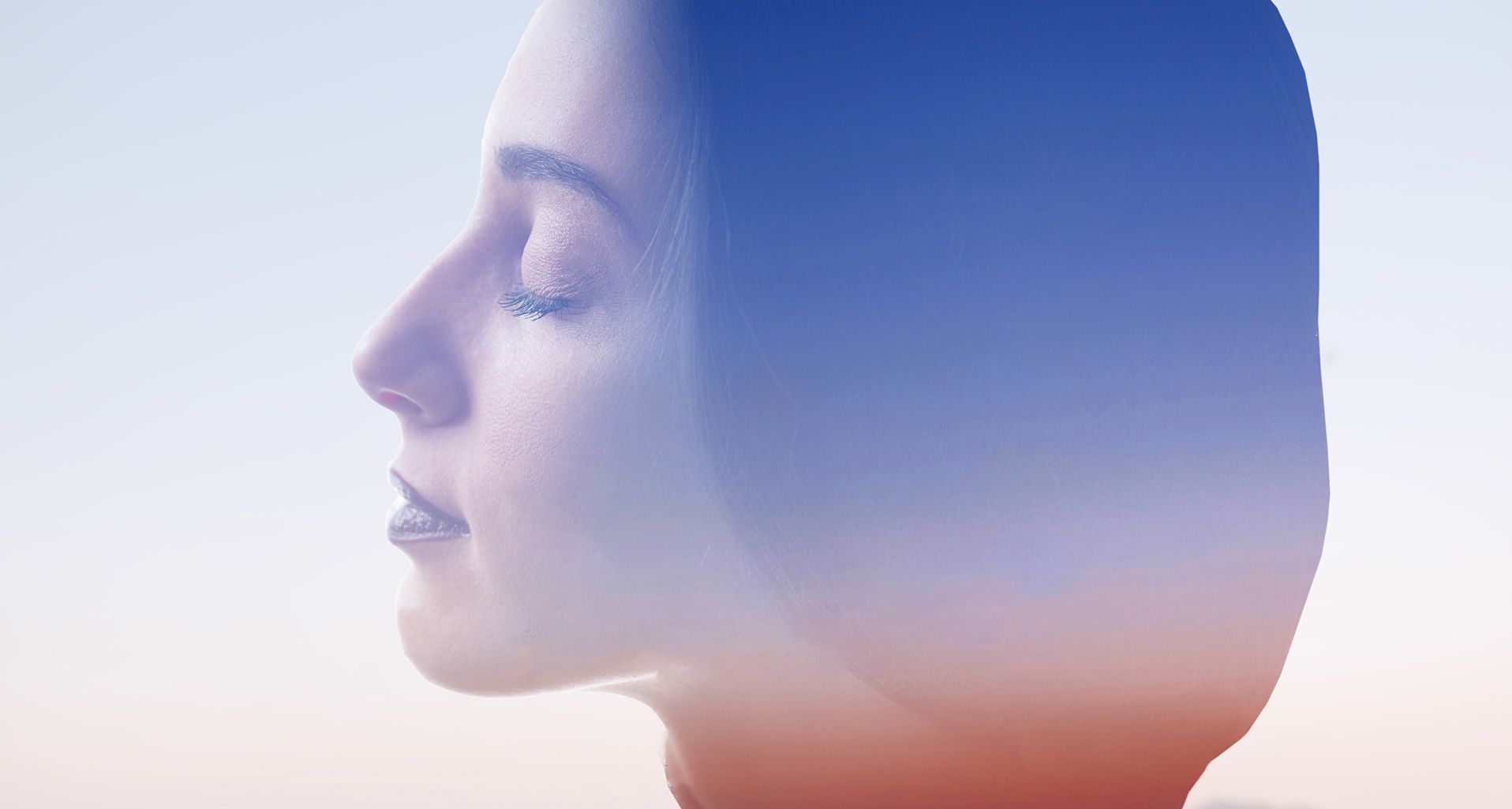
Aura colors can be a fascinating part of spiritual reflection. If you believe in an aura—a subtle field or presence associated with a person—you may be curious about what you would notice around yourself.
You can explore that idea without needing to see a glow or prove a gift. A mirror exercise is not a verified way to detect an aura, and an outline or color impression does not establish a spiritual energy field.
What does “seeing your own aura” mean?
In some spiritual practices, people describe seeing colors, brightness or a soft outline around a body. Others use aura language symbolically to reflect on feelings, values or how they want to show up in the world.
Those are different activities. A symbolic color can be personally meaningful without being something physically measured around you. Claims about visible spiritual layers, gases, fixed distances or an energy cloud filling the room should not be treated as established facts.
Why a colored outline is not proof
Vision can produce effects that feel surprising. The Exploratorium’s afterimage demonstration shows how a colored image can remain in perception after you look away. Its explanation concerns the visual system, not an aura.
That does not diagnose everything you might see. It does show why a color impression alone is not enough to identify a supernatural source. Lighting and the background also need to be considered rather than assumed to reveal spiritual energy.
You do not need to stare until something appears. Do not treat blurred vision, discomfort or a visual change as a milestone in psychic development.
A gentle mirror reflection—not an aura test
If a mirror feels comfortable to you, use it for a brief check-in rather than prolonged searching around your body.
- Choose ordinary, comfortable lighting: Do not look into the sun, lamps or other bright light sources.
- Look normally: Blink naturally. You do not need to hold your gaze, blur your focus or force a breathing pattern.
- Name how you feel: Try a word such as tired, hopeful, uncertain or settled, without treating it as a diagnosis.
- Choose a symbolic color if you wish: Ask what the color means to you rather than claiming it is an observed energy field.
- Finish with care: What small action would support your needs today? Stop if the exercise feels uncomfortable or distressing.
Nothing needs to appear. Not seeing a color does not mean you lack spiritual ability, have a blocked aura or need to buy a reading.
What about looking around your hand?
Some aura exercises suggest viewing a hand against a pale wall or dark doorway. A perceived edge or color in that setting does not verify an aura. There is no established viewing distance or background that makes it a reliable spiritual measurement.
Rather than repeating the exercise until you get a result, you can use an ordinary glance at your hand as a reminder of something concrete: a task you completed, an act of care or an intention for the day. A mirror or special setup is optional.
Give colors meaning without making them labels
You might associate blue with calm, purple with spiritual curiosity or yellow with optimism. Those are examples of personal symbolism, not universal facts about your character or health.
For example, choosing blue after a stressful morning might remind you to ask for a quieter evening. It does not prove that your aura is blue, that you are protected or that someone else can read your emotions from it.
Try these journal prompts:
- What does this color remind me of?
- Does that association fit how I feel, or only how I wish I felt?
- What need or value deserves attention?
- What could I do without assuming the color tells me a fact?
Keep any interpretation flexible. Another person’s different impression does not require you to accept their account or treat yours as an objective finding.
Do not interpret concerning eye symptoms as aura sight
The NHS guidance on floaters and flashes advises urgent assessment for first-time or sudden flashes or floaters, an increase in them, a dark shadow or curtain across vision, blurred vision or eye pain. Symptoms after an eye injury or surgery also need urgent advice.
Seek appropriate eye care rather than continuing an aura exercise or waiting for a psychic interpretation. Spiritual beliefs and medical assessment can coexist; a reading cannot diagnose a visual symptom.
Discussing aura experiences in a reading
Ask whether the reader is offering spiritual symbolism, visualization or a claim about something they see. You can explore an interpretation without agreeing that it establishes a fact.
A reader cannot diagnose illness, verify another person’s intentions or guarantee protection from an aura color. Decline pressure to purchase cleansing or repeated sessions to fix a claimed blockage. You may keep details private, disagree or stop the session.
Frequently asked questions
Can a mirror prove that I have an aura?
No. A mirror reflection or color impression is not a verified aura measurement.
Does practice guarantee that I will see one?
No. You do not need to force a visual result. Reflection can be meaningful without establishing an ability.
Does an aura color show my health or personality?
No. A symbolic interpretation is not a medical assessment or a fixed identity. Use it as a prompt, not a diagnosis.
Can I explore aura beliefs without a mirror?
Yes. Journaling about a personally meaningful color or value does not require looking for a visible field.
Let curiosity stay comfortable
If aura symbolism speaks to you, let it invite gentle self-reflection. You do not have to turn ordinary vision into proof, dismiss symptoms or achieve a special result to make the practice meaningful.
The article provides a clear methodology for seeing one’s own aura, which could be helpful for those interested in energy work.
The article touches on the subjective nature of aura interpretation, which is important to acknowledge in any discussion about personal energy fields.
Yes, personal interpretations can vary widely, and it would be fascinating to study how individual biases and perceptions influence these readings.
The section on looking through fingers in a dark room was particularly interesting. It’s a unique approach that I had not considered before.
The article provides a step-by-step guide that seems easy to follow and could be a good practice for those who believe in energy fields.
The emphasis on using a mirror and proper lighting is practical advice for beginners trying to visualize their auras.
It’s good advice to pay attention to how your energy is moving and the color of it. Personal insight is a valuable part of understanding auras.
It’s intriguing to consider the idea of seeing one’s own aura, though it would be interesting to see more scientific research on the subject.
The concept of seeing auras is quite fascinating, but I’m curious about the psychological explanations behind these visual experiences.
I agree. It would be useful to understand how much of this is influenced by perception and how much is actual energy visualization.