
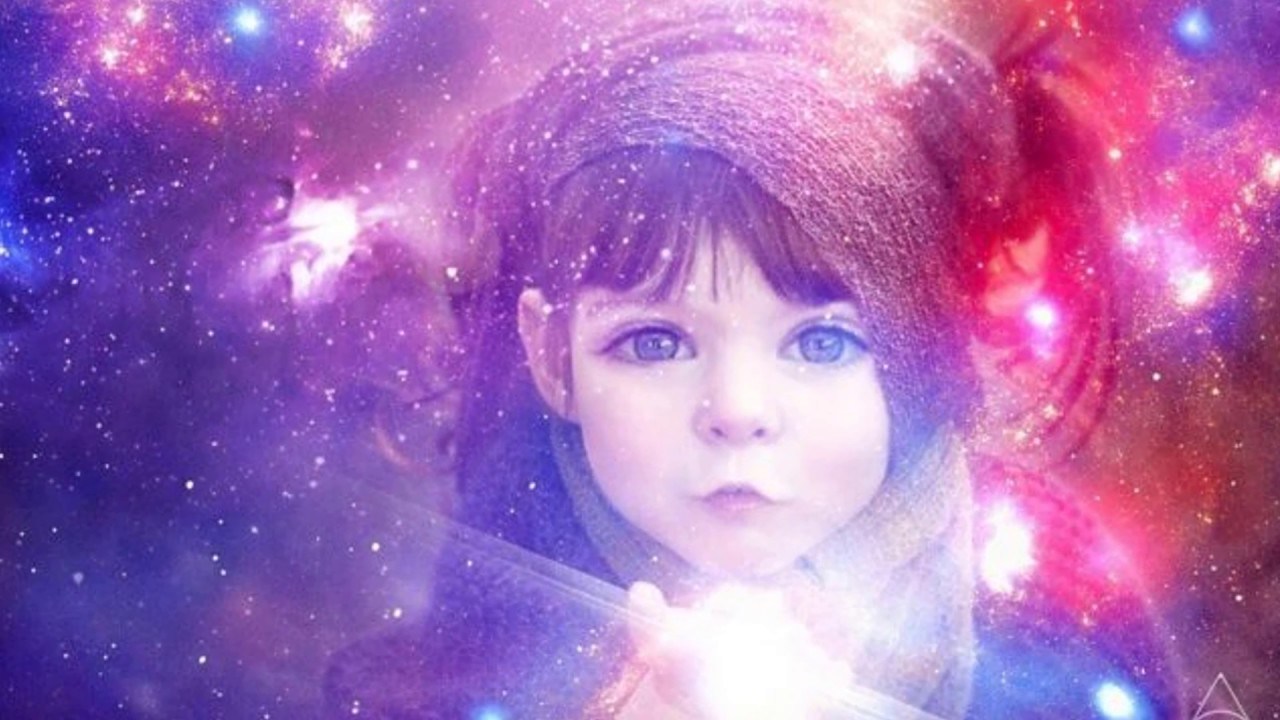
Perhaps you have heard someone call a deeply sensitive child a “crystal child,” or describe a determined young person as an “indigo.” These phrases can feel like an invitation to see a child’s differences with affection rather than frustration. For readers drawn to psychic and spiritual ideas, they offer a language of purpose, compassion, and possibility.
Indigo, crystal, and rainbow children are spiritual labels—not medical diagnoses, verified soul categories, or measures of a child’s worth. You can explore the symbolism without treating it as an explanation for development or asking a child to live up to a special destiny.
What does “star child” mean?
In this spiritual framework, “star children” are imagined as souls connected with a wider consciousness and a purpose of helping humanity. The story emphasizes wisdom, creativity, and compassion. It is a belief about meaning, not an established account of where children come from or how their brains develop.
A useful way to approach the idea is to ask, “What does this encourage me to notice?” Perhaps it reminds you to listen closely, respect a different perspective, or nurture kindness. It becomes less helpful when it turns into, “I already know everything about this child because I know their type.”
Indigo children: the symbolism of the challenger
The indigo image centers on questioning, independence, and a desire to change what feels unfair. Within the spiritual story, indigos are the trailblazers: people who challenge habits and make room for a different way of living.
If that image resonates, you might recognize a child who asks persistent questions, argues passionately for fairness, or invents their own approach to a task. Those observations can begin a conversation about values. They do not establish an aura color, psychic ability, or a mission to overturn society.
Rather than interpreting every disagreement as a “warrior spirit,” ask what the child is trying to communicate. A strong opinion can coexist with a need for reassurance, practical limits, or help expressing frustration. You can respect their voice without making conflict part of their identity.
Crystal children: the symbolism of the connector
The crystal image focuses on tenderness, harmony, and sensitivity. In the spiritual narrative, crystals help connect people after the challengers have opened a new path. Nature, quiet, and emotional warmth often feature in descriptions of this archetype.
You might use the image to reflect on a child who loves a peaceful corner, notices another person’s sadness, or enjoys caring for a pet. Let it prompt attention to their preferences—not assumptions that they can heal others, read minds, or carry adults’ emotional burdens.
Large eyes, affection, solitude, and sensitivity are not tests for a crystal identity. A child who dislikes hugs is no less loving, and a child who needs help communicating is no less valuable. The meaningful question is what helps this particular child feel understood.
Rainbow children: the symbolism of possibility
The rainbow image emphasizes joy, openness, generosity, and room for different ways of being. Within the belief system, rainbows represent a new chapter: turning earlier efforts toward a more welcoming future.
This can be a hopeful metaphor for a child who enjoys imaginative play, moves between interests, or questions rigid categories. It is not proof that they are a first-time soul, fully spiritually evolved, telepathic, or protected from distress.
A cheerful child still needs comfort when life is difficult. A generous child still has the right to say no. Calling someone a rainbow should not mean expecting them to bring endless light into the room or repair the problems of earlier generations.
How the three labels differ
As a symbolic story, the distinction is simple:
- Indigo: the challenger—an invitation to think about fairness, independence, and change.
- Crystal: the connector—an invitation to think about care, sensitivity, and understanding.
- Rainbow: the possibility-maker—an invitation to think about joy, openness, and belonging.
A person can relate to more than one image, or none. Birth-year ranges sometimes attached to these labels should not be treated as diagnostic cutoffs or a reliable way to classify someone. The labels are a lens you may choose to use, not facts a child must fit.
Spiritual labels do not explain autism or delayed speech
The CDC describes autism as a developmental disability associated with differences in the brain. Autistic people have varied strengths, communication styles, and support needs. Autism is not evidence that society has misunderstood a crystal child’s psychic gifts. A spiritual interpretation cannot confirm, dismiss, or replace a developmental assessment.
Likewise, delayed speech should not be attributed to a “high energy frequency” or assumed telepathy. The National Institute on Deafness and Other Communication Disorders explains speech and language milestones and advises discussing concerns with a doctor. Assessment may include speech-language and hearing evaluation. Do not wait until age three or four because a spiritual label suggests that a child will simply catch up.
If you are concerned about how your child communicates, learns, plays, or responds to their environment—or they lose skills—contact their healthcare professional. Assessment is about understanding needs and finding appropriate support, not rejecting your family’s beliefs.
Let curiosity lead your conversations
If you enjoy these ideas, keep the conversation open and low-pressure. Instead of “You are here to heal humanity,” try, “What matters to you?” Instead of “You must be reading my mind,” try, “What made you think of that?” Give the child room to describe their own experience, including disagreement with the label.
A few gentle questions can be more revealing than a spiritual checklist:
- What do you enjoy, and what feels tiring?
- When do you feel listened to?
- What would make this activity more comfortable?
- Would you like company, quiet, or help?
Listen to the answer rather than searching for proof of a category. If your child uses gestures, pictures, or another form of communication, work with appropriate professionals to understand and support that communication. Do not assume you can bypass it through psychic alignment.
What to avoid in a psychic reading about a child
A reader should not diagnose a child, overrule a clinician, promise a cure, or present a paid spiritual service as necessary for development. Be cautious about claims that distress proves a soul mission or that treatment will damage psychic gifts. A child’s private life should not become material for repeated predictions or public “gift” demonstrations.
If you seek a reading for your own reflection, focus on your role: listening, patience, boundaries, and the kind of support you want to offer. Do not use a reading as an authority over a child’s identity or future. Professional care and spiritual reflection serve different purposes.
Seeing the child beyond the label
The most generous part of the star-child story is its invitation to notice potential and respond with compassion. You do not have to accept every claim about souls, energies, or generations to appreciate that invitation.
Hold the metaphor lightly. Let the child be sensitive without having to be a healer, determined without having to be a warrior, and joyful without having to be spiritually perfected. Their everyday needs, interests, and choices deserve attention—whether or not any of these labels feels meaningful.
The article is well-written and informative. It clearly delineates the differences among Indigo, Crystal, and Rainbow Children.
I agree. The logical flow and the distinctions made between the different types of Star Children are quite clear and engaging.
I appreciate how the article explains the progressive development of human consciousness through these generations of Star Children. It raises intriguing questions about the evolution of humanity.
The description of the traits and purposes of Indigo, Crystal, and Rainbow children is quite detailed. However, it would be helpful to see more empirical evidence supporting these claims.
While the article is intriguing, it would be beneficial to include more scientific studies or references to back up the claims about Star Children. That would add more credibility to the discussion.
The concept of Star Children seems quite abstract and mystical. It would be helpful to have more grounded evidence or cross-references to established psychological studies to make the discussion more concrete.
The generational progression from Indigo to Crystal to Rainbow Children is interesting. It suggests a continuous evolution in human consciousness aimed at addressing various societal challenges.
The article provides a comprehensive overview of the different types of Star Children and their unique characteristics and purposes. It helps to understand the distinctions between Indigo, Crystal, and Rainbow Children.
The concept of Star Children is fascinating, especially the way each group is connected to a specific time frame and set of traits. I would be interested in learning about the scientific perspectives on this topic.